

Melanoma is the third most common cancer and the most common cancer in young Aussies (20–39-year-olds). An Australian is diagnosed with melanoma every half an hour; and one dies from the disease every five hours.
Check4SpotsDay (every 30 January, happy birthday Morgan) is a reminder to do just that. Although skin checks should be done often and regularly, this day is a reminder to take a few moments to check for any suspicious new or changes to existing spots/moles (colour, texture, size, shape). A melanoma can appear anywhere and not necessarily in areas where sunburn has occurred – so be mindful to check those areas that are not normally exposed to the sun. Please also grab a partner to check each other’s back, scalp, shoulders, soles of the feet, and any other areas we cant see normally see ourselves.
Although your doctor will be trained in identification, you might only visit them occasionally. This means that you are in the best position to notice any early changes, and by becoming familiar with your skin – makes it easier to recognise anything suspicious. And as we know with all cancers, early identification significantly improves your chances of surviving this devious cancer.

What do I need to be on the lookout for?
Be on the lookout for changes or sensations in spots or moles including itchiness, tenderness or pain, scaly, lumpy, oozing or bleeding. Be on the lookout for any spots with suspicious tell-tale signs such as in the examples below. Do you notice any spots with an irregular shape? If you run an imaginary line through the middle, does one half of the spot look similar to the other?

Do you see any spots that have an irregular or ill-defined border?
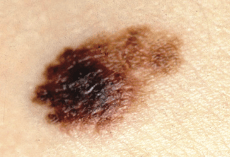
Do you see any spots that have more than one colour, including black, brown, red, blue, white and uneven or blotchy colours? Please also keep in mind that a small number of melanomas may even be colourless (ie same colour as your skin) and thus a little be more difficult to recognize.
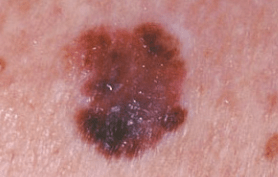
Do you notice any spots that are rapidly growing, have increased in size, or are particularly large (greater than 6mm in diameter)?

Do any of the spots feel raised?
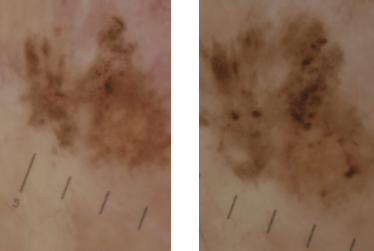
Feel your lymph nodes to check they are not swollen or feel tender.
Do not delay in making an appointment to consult with a trained skin specialist if you notice anything suspicious or if you have any concerns. By identifying early stage melanoma, the good news is that 90% of people can be treated successfully by having the primary melanoma surgically removed (usually very quick and painless).
Please think back over your lifetime…. Were you sunburnt on more than five occasions? Did you even ever suffer just one blistering sunburn when you were younger? Do you have a large number of moles? Have other people in the family suffered from melanoma? If the answer is yes to any of these – then the chance of developing melanoma later in life more than doubles.
With regular self-examination, and becoming familiar with your own skin – this will help you recognise any new spots, freckles, moles or changes to any existing spots. By identifying potential melanomas at an early stage and acting quickly – may just save your or your partner’s life. Get off insta’ and stop twittering for a moment and use your phone to take photos of any spots of concern. By taking regular photographs (say every 3 to 6 months) of any spots you are concerned about, then you can quickly and easily compare them to identify any changes.
And if you see anything you are worried about – ensure you immediately book in for a skin check at your local clinic and say NO to the MelaNOma Ditto for your loved ones.
Please always be mindful that some doctors are more experienced at diagnosing melanoma than others, and may have done additional training. Do your research – GPs often advertise areas that they may specialise in. To Morgan’s detriment, her GPs failed to show any concern about a mole on her ear she was concerned about.
Do not be put off – if you are concerned about any spots or moles on your body, get a second opinion with another professional.

Remember to take care of your skin
Whilst being mindful that some exposure to UV light is necessary for the production of vitamin D, please remember to always protect your skin. Although Morgan took great care when enjoying the outdoors, she was unlucky as you can get melanoma without even getting sunburnt. Each time your skin is exposed to UV radiation, changes take place in the structure of the cells and the skin can become permanently damaged (generally speaking, the greater the exposure – the higher the risk). Incidental sun damage can occur during other routine activities such as when driving your car. These are all very good reasons why you always need to get regular skin checks.
When UV levels are above 3, use a combination of sun protection measures such as wearing sun-protective clothing, slop on SPF30+ sunscreen; slap on a hat; slide on some sunglasses.

To keep up to date with any new breakthroughs re a melanoma cure, please click on the link (top right of this page) to follow this blog.
Further reading
Many thanks to the following organisations for providing the above information. Please take the time to visit their websites to find out more.
Alfred Health www.alfredhealth.org.au/services/victorian-melanoma-service/check-for-spots-day
Melanoma Institute of Australia www.melanoma.org.au
Peter MacCallum Cancer Centre www.petermac.org/cancer/melanoma-skin
Cancer Council https://www.cancer.org.au/preventing-cancer/sun-protection/about-skin-cancer.html
Sunsmart www.sunsmart.com.au
Thank you everyone for your support.
Peter and Julie
 Don't MS with Morgs